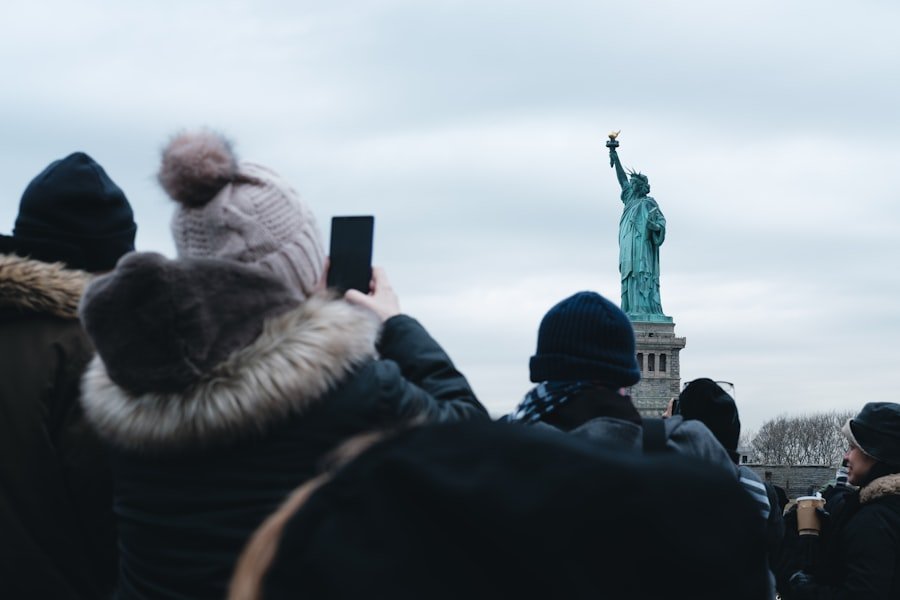
The Statue of Liberty, an iconic symbol of freedom and democracy, stands majestically on Liberty Island in New York Harbor. Designed by French sculptor Frédéric Auguste Bartholdi and dedicated in 1886, this colossal statue was a gift from France to the United States, commemorating the centennial of American independence. The statue, which depicts a robed female figure representing Libertas, the Roman goddess of freedom, holds a torch in her right hand and a tablet inscribed with the date of the American Declaration of Independence in her left.
Standing at 151 feet tall, with the pedestal adding another 154 feet, Lady Liberty is not only a remarkable feat of engineering but also a powerful symbol of hope for millions of immigrants arriving in America. Ellis Island, located just a short ferry ride from the Statue of Liberty, served as the primary immigration station for the United States from 1892 to 1954. Over 12 million immigrants passed through its doors, seeking a new life in America.
The island’s processing center was a bustling hub where immigrants underwent medical examinations and legal inspections. Many faced long waits and uncertainty as they navigated the complex immigration system. Today, the Ellis Island National Museum of Immigration preserves this rich history, offering visitors a glimpse into the struggles and triumphs of those who sought refuge and opportunity in the United States.
The museum houses artifacts, photographs, and personal stories that bring to life the experiences of immigrants who contributed to the fabric of American society.
The Empire State Building
The Empire State Building is an architectural marvel that has become synonymous with New York City itself. Completed in 1931 during the Great Depression, this Art Deco skyscraper rises to a height of 1,454 feet, including its antenna, making it one of the tallest buildings in the world. Designed by the architectural firm Shreve, Lamb & Harmon Associates, the building was constructed in just over a year, a feat that was nothing short of extraordinary given the economic challenges of the time.
The Empire State Building’s distinctive silhouette and intricate façade have made it an enduring symbol of American ingenuity and resilience. Visitors flock to the Empire State Building not only for its historical significance but also for its breathtaking views of the city from its observation decks on the 86th and 102nd floors. On a clear day, one can see for miles, taking in iconic landmarks such as Central Park, the Brooklyn Bridge, and even the distant mountains beyond the city.
The building’s lighting scheme is another highlight; it changes colors to commemorate various holidays and events throughout the year. This iconic structure has appeared in countless films and television shows, solidifying its status as a cultural touchstone. Its blend of history, architecture, and panoramic vistas makes it a must-visit destination for anyone exploring New York City.
Central Park
Central Park is an expansive green oasis nestled in the heart of Manhattan, spanning 843 acres. Designed by Frederick Law Olmsted and Calvert Vaux in the mid-19th century, it was one of the first landscaped public parks in the United States. The park was created as a response to the rapid urbanization of New York City, providing residents with a natural retreat from the hustle and bustle of city life.
Central Park features a diverse array of landscapes, including meadows, woodlands, lakes, and ponds, making it a haven for both wildlife and city dwellers seeking respite. Within Central Park lies an array of attractions that cater to visitors of all ages. The Central Park Zoo is home to a variety of animals from around the world, while Bethesda Terrace offers stunning views of the iconic fountain and surrounding gardens.
The park’s winding paths invite leisurely strolls or invigorating jogs, while its numerous playgrounds provide spaces for children to play. In winter, Central Park transforms into a snowy wonderland where visitors can ice skate at Wollman Rink or take a horse-drawn carriage ride through the snow-dusted landscape. This blend of natural beauty and recreational opportunities makes Central Park an essential part of New York City’s identity.
The Brooklyn Bridge
The Brooklyn Bridge is not only an engineering marvel but also a historic symbol of connection between Manhattan and Brooklyn. Completed in 1883, it was designed by John Roebling and later completed by his son Washington Roebling after his father’s untimely death. At the time of its completion, it was the longest suspension bridge in the world, stretching over 1,800 feet across the East River.
The bridge’s Gothic-style towers and intricate cable system showcase innovative engineering techniques that were groundbreaking for their time. Walking across the Brooklyn Bridge offers stunning views of both Manhattan’s skyline and Brooklyn’s waterfront. The pedestrian walkway is lined with tourists and locals alike, all eager to capture photographs against the backdrop of this iconic structure.
The bridge has also played a significant role in popular culture; it has been featured in numerous films, music videos, and artworks throughout history. Its status as a symbol of New York City is further solidified by its representation in literature and art as a testament to human achievement and perseverance.
The Metropolitan Museum of Art
| Landmark | Location | Year Established | Annual Visitors (millions) | Notable Feature |
|---|---|---|---|---|
| Statue of Liberty | Liberty Island | 1886 | 4.5 | Symbol of freedom and democracy |
| Empire State Building | Midtown Manhattan | 1931 | 4.0 | Observation deck with panoramic city views |
| Brooklyn Bridge | Connects Manhattan and Brooklyn | 1883 | 12.0 (pedestrians annually) | Historic suspension bridge |
| Central Park | Manhattan | 1857 | 42.0 | Urban park with lakes, theaters, and trails |
| One World Trade Center | Lower Manhattan | 2014 | 3.5 | Tallest building in the Western Hemisphere |
| Grand Central Terminal | Midtown Manhattan | 1913 | 21.0 | Historic train station with iconic architecture |
The Metropolitan Museum of Art, often referred to simply as “The Met,” is one of the largest and most prestigious art museums in the world. Founded in 1870, it houses an extensive collection that spans over 5,000 years of art from various cultures around the globe. With over two million works in its collection, The Met offers visitors an unparalleled opportunity to explore masterpieces ranging from ancient Egyptian artifacts to contemporary American art.
Its vast galleries are organized into distinct sections that reflect different periods and styles, making it easy for art enthusiasts to navigate. One of the museum’s most notable features is its iconic façade along Fifth Avenue, which invites visitors into its grand entrance adorned with majestic columns. Inside, highlights include works by renowned artists such as Vincent van Gogh, Rembrandt, and Georgia O’Keeffe.
The museum also hosts temporary exhibitions that showcase specific themes or artists, ensuring that there is always something new to discover. Beyond its impressive collection, The Met serves as an educational institution offering lectures, workshops, and guided tours that deepen visitors’ understanding of art history and appreciation.
One World Trade Center and the 9/11 Memorial
One World Trade Center stands as a poignant symbol of resilience and renewal following the tragic events of September 11, 2001. Completed in 2014, this skyscraper is not only the tallest building in the Western Hemisphere but also serves as a tribute to those who lost their lives during the attacks on the World Trade Center. Designed by architect David Childs, One World Trade Center reaches a height of 1,776 feet—a deliberate reference to the year of American independence.
Its sleek design incorporates elements that reflect both strength and hope. Adjacent to One World Trade Center is the 9/11 Memorial & Museum, which honors the nearly 3,000 victims who perished on that fateful day. The memorial features two reflecting pools set within the footprints of the original Twin Towers, surrounded by a grove of trees that provide a serene space for reflection.
Visitors can explore exhibits within the museum that detail the events leading up to September 11th, personal stories from survivors and victims’ families, and artifacts recovered from Ground Zero. Together, One World Trade Center and the memorial serve as powerful reminders of resilience in the face of tragedy and the enduring spirit of New York City.
The High Line
The High Line is an innovative urban park that has transformed an abandoned elevated railway into a vibrant green space along Manhattan’s West Side. Opened to the public in 2009 after years of community advocacy and design work by James Corner Field Operations and Diller Scofidio + Renfro, this unique park stretches approximately 1.45 miles from Gansevoort Street in the Meatpacking District to West 34th Street. The High Line features beautifully landscaped gardens filled with native plants and flowers that change with the seasons, providing visitors with a serene escape from city life.
As visitors stroll along the High Line’s pathways, they are treated to stunning views of both the Hudson River and New York City’s architectural landscape. Art installations dot the park’s route, showcasing works by contemporary artists that engage with themes related to urban life and nature. The High Line has become a popular destination for locals and tourists alike; it hosts various events throughout the year, including guided tours, performances, and educational programs aimed at fostering community engagement with nature and art.
This successful transformation exemplifies how creative urban planning can breathe new life into neglected spaces while enhancing community connectivity.
The Chrysler Building
The Chrysler Building is an architectural gem that epitomizes Art Deco design in New York City. Completed in 1930 as part of a fierce competition for skyscraper supremacy during the early 20th century, it was designed by William Van Alen for Walter P. Chrysler, founder of Chrysler Corporation. Standing at 1,046 feet tall with its distinctive spire reaching skyward, it was briefly the tallest building in the world before being surpassed by the Empire State Building just eleven months later. The building’s gleaming stainless steel crown is adorned with intricate ornamentation inspired by automotive motifs—reflecting Chrysler’s influence on American industry. Visitors marvel at both its exterior beauty and interior elegance; however, access to its observation deck is limited compared to other skyscrapers in New York City. Nonetheless, its lobby is open to guests who wish to admire its stunning murals depicting transportation themes alongside polished marble finishes that evoke luxury and sophistication. The Chrysler Building remains an enduring symbol not only of New York City’s architectural heritage but also of its dynamic spirit during an era marked by innovation and ambition. Its striking silhouette continues to captivate those who gaze upon it from various vantage points throughout Manhattan.
FAQs
What are some iconic landmarks in New York City besides Times Square?
New York City is home to many iconic landmarks beyond Times Square, including the Statue of Liberty, Central Park, the Empire State Building, the Brooklyn Bridge, the One World Trade Center, and the Metropolitan Museum of Art.
Where is the Statue of Liberty located?
The Statue of Liberty is located on Liberty Island in New York Harbor. It is accessible by ferry from Battery Park in Lower Manhattan.
Can visitors go inside the Empire State Building?
Yes, visitors can go inside the Empire State Building. It features observation decks on the 86th and 102nd floors that offer panoramic views of New York City.
What is special about Central Park?
Central Park is a large urban park in the heart of Manhattan, covering 843 acres. It offers walking trails, lakes, gardens, playgrounds, and cultural attractions, making it a popular destination for both locals and tourists.
Is the Brooklyn Bridge open to pedestrians?
Yes, the Brooklyn Bridge has a dedicated pedestrian walkway that allows people to walk or bike between Manhattan and Brooklyn while enjoying scenic views of the city skyline and the East River.
What can visitors see at the One World Trade Center?
One World Trade Center, also known as the Freedom Tower, features an observation deck called One World Observatory. Visitors can enjoy 360-degree views of New York City and learn about the history of the World Trade Center site.
Are there any famous museums in New York City besides the Metropolitan Museum of Art?
Yes, New York City has several world-renowned museums including the Museum of Modern Art (MoMA), the American Museum of Natural History, the Guggenheim Museum, and the Whitney Museum of American Art.
How can tourists get around to visit these landmarks?
Tourists can use the extensive New York City subway system, buses, taxis, rideshares, or walk to visit many landmarks. Some landmarks are also accessible by ferry or bike.
About the Author