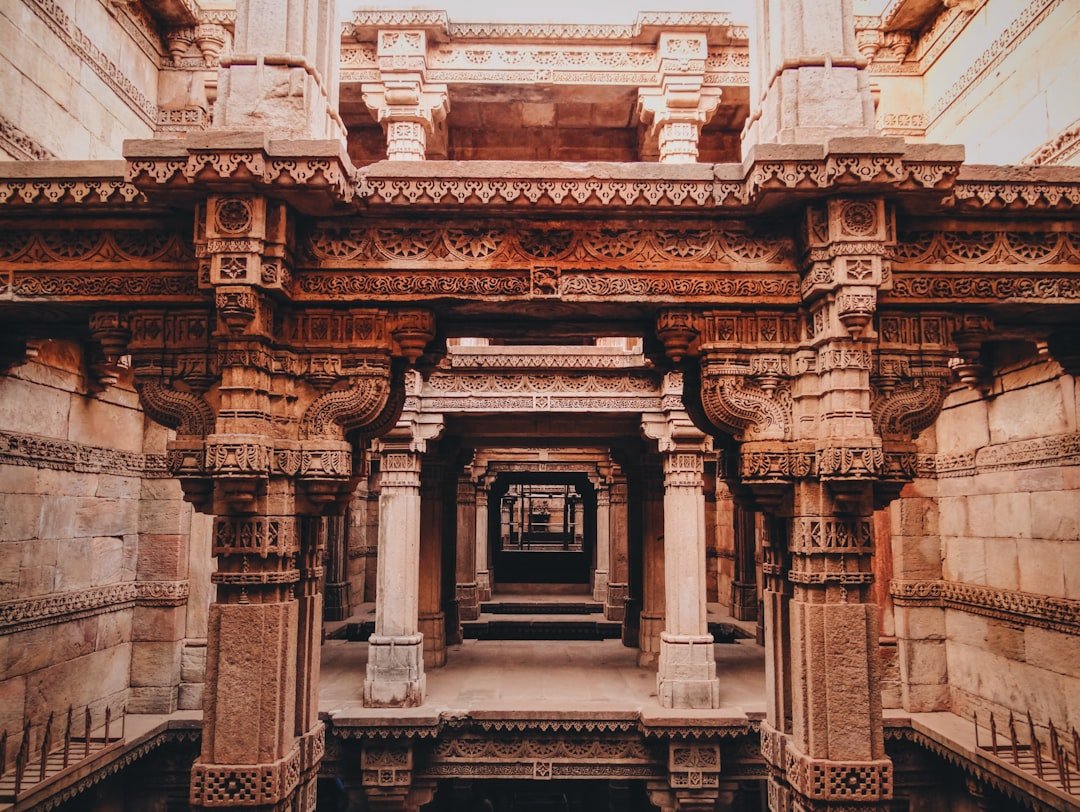
India’s temples and palaces serve as architectural records of the subcontinent’s historical, cultural, and religious development spanning several millennia. These structures document the progression of building techniques, religious customs, and political systems across different periods. Archaeological evidence from the Indus Valley Civilization (c.
3300-1300 BCE) reveals early religious structures with basic designs that established foundational principles for later temple construction. The subsequent development of Hinduism, Buddhism, and Jainism between 600 BCE and 600 CE led to increasingly sophisticated architectural techniques and decorative elements. Notable examples include the Brihadeeswarar Temple in Thanjavur, completed in 1010 CE during the Chola dynasty, and the 13th-century Sun Temple in Konark, built under the Eastern Ganga dynasty.
Palace construction evolved as expressions of dynastic power from the Mauryan period (322-185 BCE) through the Mughal era (1526-1857 CE). Each structure reflects the economic resources and aesthetic preferences of its respective ruling period. Rajasthani palaces exemplify this tradition, with the City Palace in Jaipur (begun in 1729) and the Lake Palace in Udaipur (completed in 1746) featuring detailed frescoes and mirror work characteristic of Rajput architectural style.
These complexes functioned as administrative headquarters and cultural centers, housing courts where artistic and literary activities were patronized. The parallel development of religious and secular architecture demonstrates the interconnected nature of spiritual institutions and political authority throughout Indian history, with both temple and palace construction often supported by the same ruling dynasties.
Architectural Marvels: Exploring India’s Sacred Temples
The architectural diversity of India’s temples is a testament to the country’s rich cultural tapestry. From the towering spires of North Indian temples to the intricate carvings of South Indian structures, each temple embodies a unique style that reflects regional influences and historical contexts. The Nagara style prevalent in northern India is characterized by its curvilinear shikhara (spire) and elaborate sculptures depicting deities and mythological narratives.
In contrast, the Dravidian style found in southern India features pyramid-shaped vimanas (temple towers) adorned with vibrant sculptures that narrate stories from Hindu epics. One cannot discuss Indian temples without mentioning the exquisite craftsmanship that goes into their construction. The Khajuraho temples, a UNESCO World Heritage site, are renowned for their erotic sculptures that explore themes of love and spirituality.
These temples were built during the Chandela dynasty between 950 and 1050 CE and showcase a remarkable blend of art and architecture. Similarly, the Meenakshi Temple in Madurai is famous for its towering gopurams (gateway towers) covered in colorful stucco figures, each telling a story from Hindu mythology. Such temples not only serve as places of worship but also as living museums that preserve ancient artistic traditions.
The Intricate Designs and Symbolism of India’s Palaces
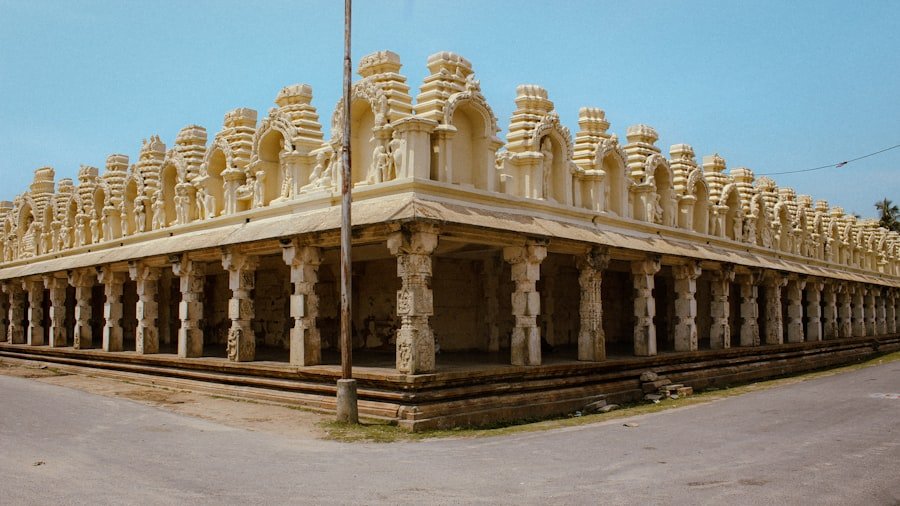
India’s palaces are a reflection of the artistic ingenuity and cultural richness that characterized various dynasties throughout history. Each palace is a canvas that tells stories through its intricate designs, vibrant frescoes, and elaborate courtyards. The City Palace in Jaipur, for instance, is a stunning amalgamation of Rajput and Mughal architectural styles.
Its courtyards are adorned with intricate latticework and mirror-inlaid walls that shimmer in the sunlight, creating an ethereal atmosphere. The palace complex also houses museums that display royal artifacts, providing insight into the opulent lifestyle of its erstwhile inhabitants. Symbolism plays a crucial role in palace architecture, where every element is imbued with meaning.
The use of water features, such as pools and fountains, symbolizes purity and tranquility, while gardens often represent paradise on earth. The Fatehpur Sikri complex, built by Emperor Akbar in the late 16th century, exemplifies this philosophy with its meticulously designed gardens that reflect Mughal ideals of beauty and harmony. The palaces also served as venues for significant cultural events, including festivals and royal ceremonies, further embedding them into the social fabric of their time.
Religious Significance: Understanding the Temples of India
Temples in India are not just architectural wonders; they are vital centers of religious life and community engagement. Each temple is dedicated to specific deities, serving as a focal point for worshippers who come to seek blessings, perform rituals, or participate in festivals. The Kashi Vishwanath Temple in Varanasi is one such sacred site that attracts millions of pilgrims annually.
Dedicated to Lord Shiva, it stands as a testament to the enduring faith of Hindus and their belief in the transformative power of pilgrimage. The rituals performed within these temples are steeped in tradition and often vary from region to region. For instance, during festivals like Diwali or Navaratri, temples become vibrant hubs of activity where devotees engage in prayers, music, dance, and communal feasting.
The significance of these rituals extends beyond mere observance; they foster a sense of community among worshippers and reinforce cultural identity. Temples also play a crucial role in preserving ancient texts and scriptures, ensuring that spiritual knowledge is passed down through generations.
The Magnificent Palaces of India: A Glimpse into Royal Life
| Temple/Palace Name | Location | Year Built | Architectural Style | Notable Feature | Visitor Rating (out of 5) |
|---|---|---|---|---|---|
| Meenakshi Amman Temple | Madurai, Tamil Nadu | 7th Century CE | Dravidian | Intricate gopurams and thousand-pillared hall | 4.8 |
| Golden Temple (Harmandir Sahib) | Amritsar, Punjab | 1589 CE | Sikh Architecture | Gold-plated exterior and holy sarovar | 4.9 |
| City Palace | Udaipur, Rajasthan | 1559 CE | Rajput & Mughal | Lake Palace views and intricate balconies | 4.6 |
| Konark Sun Temple | Konark, Odisha | 13th Century CE | Kalinga Architecture | Chariot-shaped temple with detailed carvings | 4.5 |
| Hawa Mahal | Jaipur, Rajasthan | 1799 CE | Rajput | Facade with 953 small windows (jharokhas) | 4.4 |
| Brihadeeswarar Temple | Thanjavur, Tamil Nadu | 1010 CE | Chola Architecture | Massive vimana and monolithic Nandi statue | 4.7 |
| Mysore Palace | Mysore, Karnataka | 1912 CE | Indo-Saracenic | Illuminated palace during Dussehra festival | 4.6 |
The palaces of India offer a fascinating glimpse into the lives of royalty and their courtly traditions. These grand structures were not only residences but also centers of political power where decisions affecting vast empires were made. The Mysore Palace is an exemplary representation of this duality; it showcases Indo-Saracenic architecture with its ornate domes and arches while serving as the official residence of the Wadiyar dynasty.
The palace is particularly famous for its Dussehra celebrations, where it is illuminated with thousands of lights, drawing visitors from around the world. Inside these palaces, one can find opulent halls adorned with exquisite chandeliers, intricately carved furniture, and lavish textiles that speak to the wealth and sophistication of royal life. The Sheesh Mahal (Palace of Mirrors) in Jaipur is a prime example; its walls are lined with tiny mirrors that create an illusion of infinite space when illuminated by candlelight.
Such spaces were often used for entertainment and gatherings, where music and dance flourished under the patronage of kings and queens. The palaces thus serve as historical archives that provide insight into the cultural practices and lifestyles of India’s erstwhile rulers.
Temples and Palaces: A Reflection of India’s Cultural Diversity
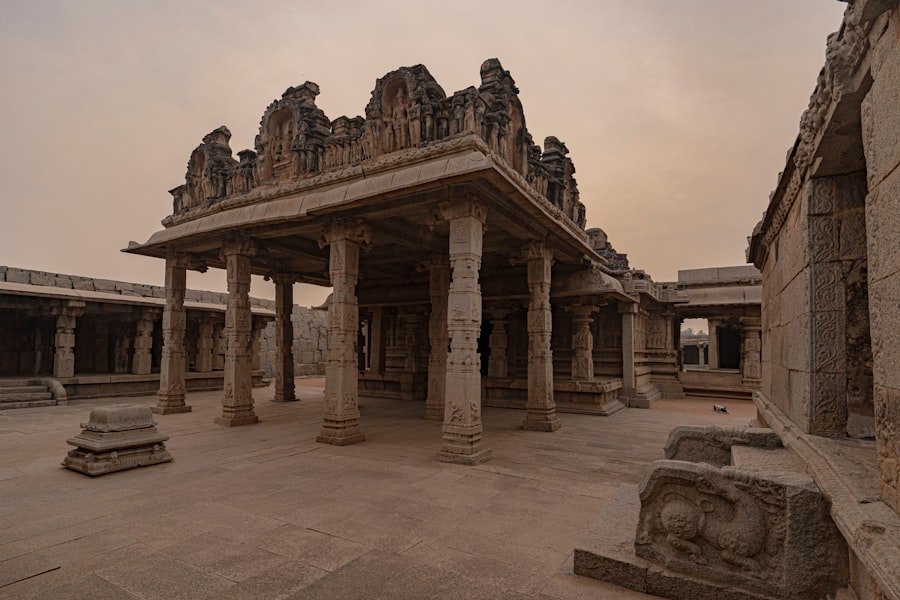
The diversity found within India’s temples and palaces is a microcosm of the country’s broader cultural landscape. Each region boasts its own architectural styles influenced by local traditions, materials, and historical contexts. For instance, while South Indian temples often feature towering vimanas adorned with intricate sculptures, North Indian temples may showcase elaborate shikharas with detailed carvings depicting deities from Hindu mythology.
This regional variation highlights how local customs and beliefs have shaped religious architecture over centuries. Similarly, palaces across India reflect the unique identities of their respective regions. The ornate havelis (mansions) of Rajasthan are characterized by their intricate jali work (lattice screens) and vibrant frescoes depicting royal life.
In contrast, the coastal palaces in Kerala often incorporate elements from traditional wooden architecture, showcasing a harmonious blend with nature. This cultural diversity is further enriched by the myriad festivals celebrated at these sites—each festival reflecting local customs while contributing to a shared national identity rooted in spirituality and heritage.
Must-Visit Temples and Palaces in India
For those seeking to explore India’s rich heritage through its temples and palaces, several sites stand out as must-visit destinations. The Golden Temple in Amritsar is an iconic symbol of Sikhism known for its stunning architecture and serene atmosphere. Its gilded façade reflects beautifully in the surrounding sacred pool, attracting visitors from all walks of life who come to experience its spiritual ambiance.
In terms of palatial grandeur, the Udaipur City Palace offers breathtaking views over Lake Pichola and showcases an impressive collection of artifacts from the Mewar dynasty. Visitors can wander through its courtyards adorned with intricate peacock mosaics while learning about the history that shaped this enchanting city. Another notable mention is the Hawa Mahal in Jaipur—its unique façade with numerous windows allowed royal women to observe street festivities without being seen.
Preserving India’s Heritage: The Importance of Temples and Palaces
The preservation of India’s temples and palaces is crucial not only for maintaining architectural integrity but also for safeguarding cultural heritage. These structures serve as tangible links to India’s past, embodying centuries of artistic expression and spiritual devotion. Organizations like the Archaeological Survey of India (ASI) play a vital role in conservation efforts by implementing restoration projects aimed at protecting these historical sites from environmental degradation and urban encroachment.
Moreover, temples and palaces contribute significantly to local economies through tourism. They attract millions of visitors each year who come to marvel at their beauty while learning about India’s diverse history. This influx generates revenue that can be reinvested into conservation efforts as well as local communities.
Engaging local populations in preservation initiatives fosters a sense of ownership over their heritage while ensuring that traditional crafts associated with temple building or palace decoration continue to thrive. In conclusion, India’s temples and palaces are not just relics of a bygone era; they are living embodiments of a culture that values spirituality, artistry, and history. Their preservation is essential for future generations to appreciate the rich tapestry that makes up India’s identity today.
FAQs
What are some unique temples to visit in India?
India is home to many unique temples, including the Sun Temple in Konark, Odisha, known for its chariot-shaped architecture; the Golden Temple in Amritsar, Punjab, famous for its stunning gold-plated exterior; and the Kailasa Temple in Ellora, Maharashtra, which is a remarkable rock-cut structure.
Which palaces in India are considered must-visit for their uniqueness?
Some must-visit unique palaces in India include the City Palace in Udaipur, Rajasthan, known for its intricate peacock mosaics; the Mysore Palace in Karnataka, famous for its grand architecture and illumination; and the Umaid Bhawan Palace in Jodhpur, Rajasthan, which blends Indian and Western architectural styles.
Are these temples and palaces open to tourists year-round?
Most temples and palaces in India are open to tourists throughout the year, but some may have specific visiting hours or close during certain festivals or maintenance periods. It is advisable to check the official websites or local tourism information before planning a visit.
Is there an entry fee to visit these temples and palaces?
Many temples in India do not charge an entry fee, but some palaces and heritage sites may have an entrance fee for tourists. The fee varies depending on the site and whether the visitor is domestic or international.
Can visitors take photographs inside these temples and palaces?
Photography policies vary by site. Some temples and palaces allow photography in designated areas, while others may prohibit it inside the sanctum or certain rooms. Visitors should look for signage or ask staff for permission before taking photos.
What is the best time of year to visit these temples and palaces in India?
The best time to visit most temples and palaces in India is during the cooler months from October to March, when the weather is more comfortable for sightseeing. Avoiding the monsoon season (June to September) is generally recommended to prevent travel disruptions.
Are guided tours available at these unique temples and palaces?
Yes, many temples and palaces offer guided tours either through official guides or private tour operators. Guided tours can provide valuable historical and cultural insights, enhancing the visitor experience.
Are these sites accessible for people with disabilities?
Accessibility varies by site. Some modernized palaces and temples have made provisions for visitors with disabilities, including ramps and accessible restrooms, but many historic sites may have limited accessibility due to their age and architecture. It is best to inquire in advance.