
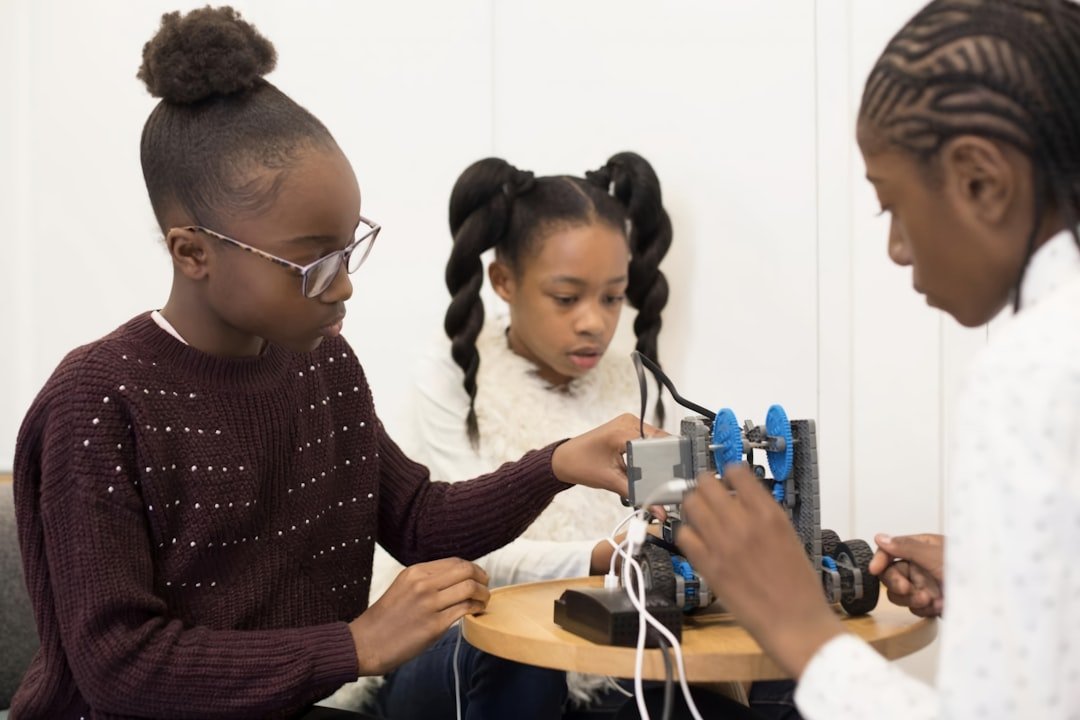
The field of robotics has evolved dramatically over the past few decades, transitioning from rudimentary mechanical devices to sophisticated systems capable of performing complex tasks autonomously. Advanced robotics programs are at the forefront of this evolution, integrating disciplines such as artificial intelligence, machine learning, computer vision, and control systems. These programs are designed to equip students with the knowledge and skills necessary to design, build, and program robots that can operate in a variety of environments, from manufacturing floors to healthcare settings.
As industries increasingly adopt automation and robotics to enhance efficiency and productivity, the demand for skilled professionals in this field continues to grow. Advanced robotics programs not only focus on the technical aspects of robotics but also emphasize interdisciplinary collaboration. Students are encouraged to work on projects that require knowledge from various fields, including mechanical engineering, electrical engineering, computer science, and even psychology.
This holistic approach prepares graduates to tackle real-world challenges, fostering innovation and creativity. As we delve deeper into the landscape of advanced robotics education, it becomes evident that these programs are shaping the future of technology and its applications across multiple sectors.
Top Schools Offering Advanced Robotics Programs
Several prestigious institutions around the globe have established themselves as leaders in advanced robotics education. The Massachusetts Institute of Technology (MIT) is renowned for its cutting-edge research and innovative curriculum in robotics. The MIT Media Lab and the Department of Electrical Engineering and Computer Science offer programs that focus on human-robot interaction, robotic perception, and autonomous systems.
Students at MIT benefit from access to state-of-the-art facilities and resources, including the MIT Robot Locomotion Group, which conducts pioneering research in robot mobility. Carnegie Mellon University (CMU) is another prominent institution known for its Robotics Institute, which is one of the first of its kind in the world. CMU offers a range of undergraduate and graduate programs that cover various aspects of robotics, including perception, learning, and manipulation.
The university’s emphasis on interdisciplinary collaboration allows students to engage in projects that span multiple domains, such as healthcare robotics and autonomous vehicles. Additionally, CMU’s strong ties with industry partners provide students with valuable networking opportunities and exposure to real-world applications of their studies. Other notable institutions include Stanford University, which offers a robust robotics program through its Department of Mechanical Engineering and the Stanford Artificial Intelligence Laboratory.
The University of California, Berkeley, is also recognized for its research in robotics and artificial intelligence, particularly in areas like robotic manipulation and swarm robotics. These schools not only provide rigorous academic training but also foster an environment conducive to innovation and exploration in the field of robotics.
Curriculum and Courses in Advanced Robotics
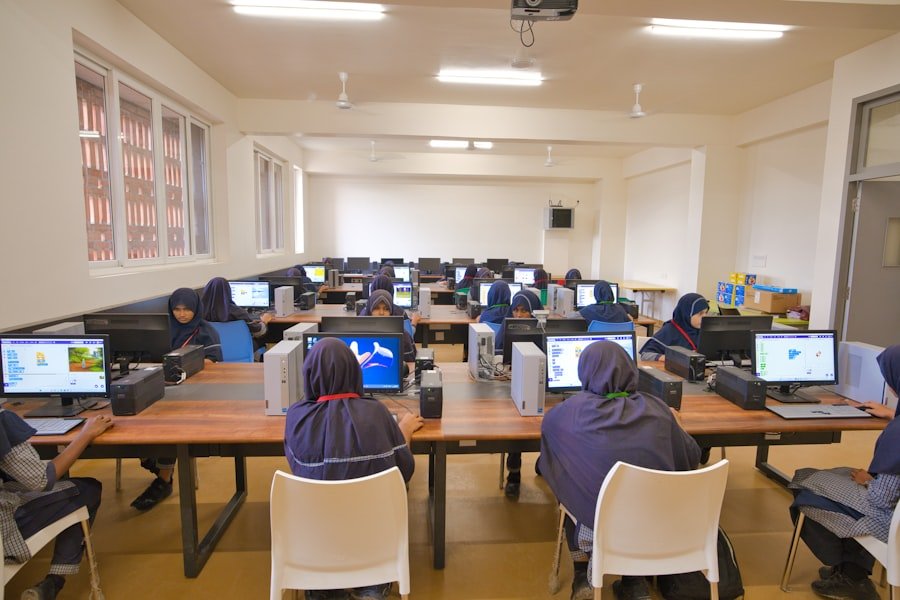
The curriculum of advanced robotics programs is designed to provide a comprehensive understanding of both theoretical concepts and practical applications. Core courses typically cover fundamental topics such as kinematics, dynamics, control theory, and programming for robotics. Students learn how to model robotic systems mathematically and develop algorithms that enable robots to perform tasks autonomously.
For instance, courses in machine learning teach students how to implement algorithms that allow robots to learn from data and improve their performance over time. In addition to core courses, many programs offer specialized electives that allow students to delve deeper into specific areas of interest. Topics may include robotic vision, natural language processing for human-robot interaction, and ethical considerations in robotics.
Hands-on laboratory work is a critical component of the curriculum, enabling students to apply theoretical knowledge to real-world problems. For example, students might work on projects involving the design and programming of robotic arms for industrial applications or develop autonomous drones for environmental monitoring. Moreover, interdisciplinary courses that integrate robotics with other fields are increasingly common.
For instance, students may take courses in biomedical engineering to explore the development of assistive robots for individuals with disabilities or engage in projects that combine robotics with environmental science to create robots capable of performing ecological surveys. This interdisciplinary approach not only enriches the educational experience but also prepares students for the diverse challenges they will face in their careers.
Research and Innovation in Advanced Robotics
Research plays a pivotal role in advancing the field of robotics, with universities often serving as hubs for innovation. Faculty members and students engage in cutting-edge research projects that push the boundaries of what robots can achieve. For example, at MIT’s Computer Science and Artificial Intelligence Laboratory (CSAIL), researchers are exploring new algorithms for robot navigation in complex environments.
This research has significant implications for autonomous vehicles and drones, which must navigate unpredictable terrains while avoiding obstacles. Another area of active research is human-robot collaboration. At Carnegie Mellon University, researchers are developing robots that can work alongside humans in manufacturing settings.
These collaborative robots, or cobots, are designed to assist workers by taking on repetitive or dangerous tasks while allowing humans to focus on more complex activities. This research not only enhances productivity but also addresses safety concerns in industrial environments. Furthermore, advancements in soft robotics are gaining traction within academic research circles.
Soft robots are made from flexible materials that allow them to adapt to their surroundings more easily than traditional rigid robots. Research teams at institutions like Harvard University are investigating how soft robots can be used in delicate tasks such as minimally invasive surgery or search-and-rescue operations in disaster-stricken areas. These innovative approaches highlight the potential for robotics to transform various industries by providing solutions that were previously unattainable.
Internship and Co-op Opportunities in Advanced Robotics
| School Name | Location | Program Name | Program Level | Key Features | Duration |
|---|---|---|---|---|---|
| Massachusetts Institute of Technology (MIT) | Cambridge, MA | Robotics Engineering | Graduate & Undergraduate | Cutting-edge research, AI integration, hands-on labs | 4 years (Undergrad), 2 years (Graduate) |
| Carnegie Mellon University | Pittsburgh, PA | Robotics Institute | Graduate & Undergraduate | Interdisciplinary approach, industry partnerships, robotics competitions | 4 years (Undergrad), 2 years (Graduate) |
| Stanford University | Stanford, CA | Robotics and Intelligent Systems | Graduate & Undergraduate | AI and machine learning focus, entrepreneurial opportunities | 4 years (Undergrad), 2 years (Graduate) |
| Georgia Institute of Technology | Atlanta, GA | Robotics PhD Program | Graduate | Advanced robotics research, collaboration with industry | 3-5 years (PhD) |
| University of Michigan | Ann Arbor, MI | Robotics Minor & Graduate Program | Undergraduate Minor & Graduate | Interdisciplinary curriculum, lab access, research projects | 2 years (Minor), 2 years (Graduate) |
Internships and cooperative education (co-op) programs are integral components of advanced robotics education, providing students with invaluable hands-on experience in real-world settings. Many universities have established partnerships with leading technology companies, research institutions, and government agencies that offer internship opportunities specifically tailored for robotics students. These experiences allow students to apply their classroom knowledge to practical challenges while gaining insights into industry practices.
For instance, students at Stanford University often secure internships with companies like Google X or Boston Dynamics, where they work on cutting-edge projects involving autonomous systems or robotic prototypes. These internships not only enhance technical skills but also foster professional networks that can be beneficial for future career opportunities. Additionally, co-op programs allow students to alternate between academic study and full-time work experience, providing an extended period for immersive learning.
Moreover, participation in competitions such as the RoboCup or DARPA Robotics Challenge can also serve as a form of experiential learning. These competitions challenge students to design and program robots capable of completing specific tasks under competitive conditions. Engaging in such events not only hones technical skills but also cultivates teamwork and problem-solving abilities—essential traits for success in the field of robotics.
Career Paths for Graduates of Advanced Robotics Programs

Graduates of advanced robotics programs have a wide array of career paths available to them due to the interdisciplinary nature of their education. Many find positions in industries such as manufacturing, healthcare, aerospace, and automotive engineering. For instance, graduates may work as robotic engineers responsible for designing and developing robotic systems used in assembly lines or quality control processes.
Their expertise enables companies to enhance efficiency through automation while maintaining high standards of quality. Another promising career path is in research and development (R&D), where graduates contribute to advancing robotic technologies through innovative projects. Positions in R&D can be found within academic institutions, private companies, or government laboratories focused on cutting-edge research initiatives.
Graduates may also pursue careers as software developers specializing in programming algorithms for machine learning or computer vision applications within robotic systems. Additionally, some graduates choose to enter academia by pursuing advanced degrees such as a Ph.D., allowing them to engage in teaching and research at universities or research institutions. This path not only contributes to the advancement of knowledge within the field but also inspires the next generation of robotics professionals.
The versatility of an advanced robotics education ensures that graduates are well-prepared for a dynamic job market characterized by rapid technological advancements.
Alumni Success Stories in Advanced Robotics
The success stories of alumni from advanced robotics programs serve as inspiring examples of what can be achieved with a solid educational foundation combined with passion and determination. For instance, an alumnus from Carnegie Mellon University went on to co-found a startup focused on developing autonomous delivery drones. Their innovative approach has garnered significant attention from investors and has led to partnerships with major logistics companies looking to integrate drone technology into their operations.
Another notable success story comes from a graduate of MIT who has made significant contributions to the field of medical robotics. After completing their studies, they joined a leading medical device company where they played a key role in developing robotic surgical systems that enhance precision during minimally invasive procedures. Their work has not only improved patient outcomes but has also positioned them as a thought leader within the medical robotics community.
These alumni exemplify how advanced robotics education can lead to impactful careers that drive innovation across various sectors. Their achievements highlight the importance of combining technical expertise with entrepreneurial spirit and a commitment to addressing real-world challenges through technology.
Future of Advanced Robotics and Emerging Technologies
The future of advanced robotics is poised for remarkable growth as emerging technologies continue to reshape the landscape. One significant trend is the integration of artificial intelligence (AI) into robotic systems, enabling them to learn from their environments and adapt their behaviors accordingly. This advancement will lead to more intelligent robots capable of performing complex tasks with minimal human intervention.
Additionally, advancements in materials science are paving the way for new types of robots that can operate safely alongside humans. Soft robotics is expected to play a crucial role in applications ranging from healthcare—where gentle touch is essential—to search-and-rescue missions where adaptability is key. As these technologies mature, we can anticipate a new generation of robots that are not only more capable but also more versatile.
Moreover, ethical considerations surrounding robotics will become increasingly important as these technologies become more integrated into daily life. Issues related to privacy, security, and job displacement will require thoughtful dialogue among technologists, policymakers, and society at large. As advanced robotics programs continue to evolve, they will play a critical role in preparing future leaders who can navigate these challenges while driving innovation forward.
In conclusion, advanced robotics programs represent a dynamic intersection of technology and creativity that is shaping the future across multiple industries. With robust curricula, hands-on experiences, and a focus on interdisciplinary collaboration, these programs are equipping the next generation of innovators with the tools they need to succeed in an ever-evolving landscape.
FAQs
What types of schools typically offer advanced robotics programs?
Advanced robotics programs are commonly offered at universities, technical institutes, and some high schools with specialized STEM curricula. Many universities with strong engineering or computer science departments provide comprehensive robotics courses and research opportunities.
Are advanced robotics programs available at the undergraduate level?
Yes, many universities offer undergraduate degrees in robotics or related fields such as mechanical engineering, electrical engineering, computer science, or mechatronics, which include advanced robotics coursework.
Do graduate programs in robotics exist?
Absolutely. Numerous institutions offer master’s and doctoral programs focused specifically on robotics, artificial intelligence, and automation, providing advanced research and specialization opportunities.
Can high schools offer advanced robotics programs?
Some high schools, particularly those with STEM academies or specialized technical tracks, offer advanced robotics courses and extracurricular robotics clubs or competitions like FIRST Robotics.
Are there online schools or programs for advanced robotics?
Yes, several universities and educational platforms provide online courses and degree programs in robotics and related fields, allowing students to study advanced robotics remotely.
What should students look for when choosing a school for advanced robotics?
Students should consider the school’s faculty expertise, research facilities, industry partnerships, curriculum comprehensiveness, hands-on learning opportunities, and availability of robotics competitions or clubs.
Do schools offering advanced robotics programs provide hands-on experience?
Most advanced robotics programs emphasize practical experience through labs, projects, internships, and participation in robotics competitions to develop real-world skills.
Are scholarships available for students pursuing advanced robotics studies?
Many institutions and organizations offer scholarships and grants specifically for students in STEM fields, including robotics, to support their education and research.
How can I find a list of schools with advanced robotics programs?
You can research university websites, consult educational directories, attend college fairs focused on STEM, or explore robotics competition participant lists to identify schools with strong robotics programs.
About the Author